The information provided on this publication is for general informational purposes only. While we strive to keep the information up to date, we make no representations or warranties of any kind about the completeness, accuracy, reliability, or suitability for your business, of the information provided or the views expressed herein. For specific advice applicable to your business, please contact a professional.

The problem with most book recommendations is that they’re built for the "average" reader. But you aren’t average. You have a specific, weird, wonderful collection of things you already know and a gaping, mysterious void of things you don't. Maybe you know everything about 18th-century naval history but couldn't explain how a refrigerator works if your life depended on it.
Standard algorithms suggest what’s popular. What you actually need is a Personal Librarian, someone who knows exactly where your intellectual "potholes" are and has the perfect brick to fill them.
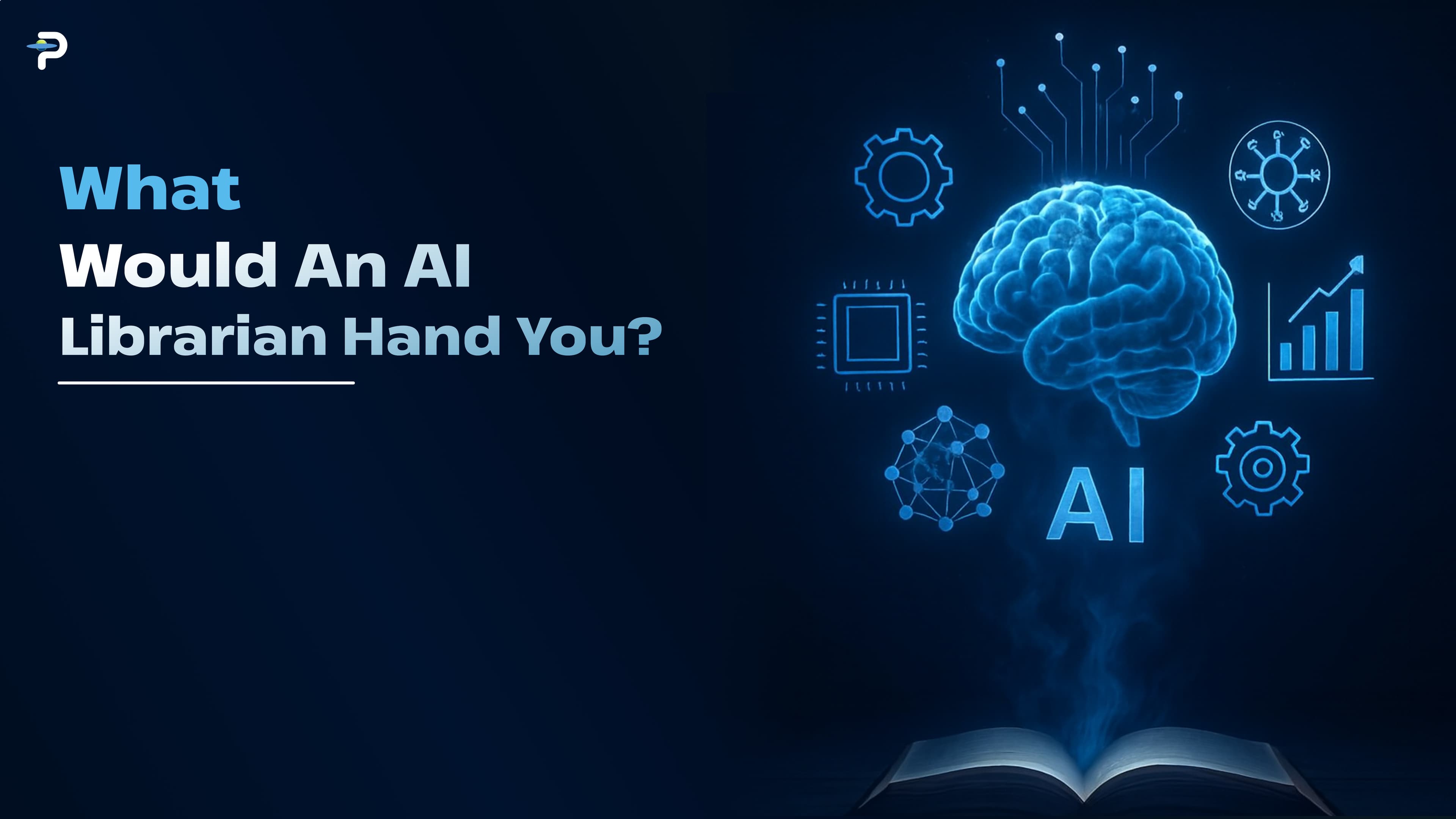
Enter the Large Language Model (LLM). If you stop treating AI like a search engine and start treating it like a hyper-literate eccentric friend, you can curate a reading list that actually changes how you think.
The "New York Times Bestseller" list is basically a popularity contest. It’s fine if you want something to talk about at a cocktail party, but it’s terrible for structured learning.
True growth happens when you find the "adjacent possible", the stuff that sits right on the edge of what you already understand. If you’re a coder who wants to understand philosophy, you shouldn't start with a 600-page tome on Kant. You need the bridge. AI is the only tool on the planet that can find that bridge for you in three seconds flat.
To get a great list, you have to admit what you suck at. Most of us pretend we understand things we don't. To the AI, you can be honest.
Try this instead of requesting "books on economics": "I know how to balance a checkbook and I understand the fundamentals of supply and demand, but I have no idea how the Federal Reserve actually influences my rent price." Textbooks with a lot of math bore me. Which three books use history or narrative to explain macroeconomics?
You've already out-filtered every generic list on the internet by defining the Gap (The Fed's impact) and the Constraint (No math-heavy textbooks).
Working backward from someone you admire is one of the best ways to use an LLM as a librarian.
Let's say you love the way Naval Ravikant or Ava from thinks. You don’t want to read what they wrote; you want to read what read to become who they are.

Discover more articles you may like.
Some top of the line writers.
Best Articles from Top Authors
Try this prompt: "Like [Person], I want to create a mental model for systems thinking. What are the "foundational" texts they most likely studied that aren't the ones that everyone mentions, based on their writing style and public interviews?"
Books that are out of print or buried in obscure academic corners are frequently the best. Ask the AI to identify the "common ancestor" of your most cherished concepts in order to discover these.
If you enjoy three distinct productivity books, inquire: "I've read Getting Things Done, Deep Work, and Atomic Habits. These all seem to stem from a specific school of psychological thought. What is the 'source' text or the most challenging academic book that these authors likely drew their inspiration from?"
Suddenly, you’re not reading the "watered-down" version for the masses; you’re reading the source code.
Before you go out and spend $20 on a hardcover, use the AI to "sample" the book’s soul.
Ask it:
"Give me a 300-word summary of the most controversial argument in [Book Title] and write it in the style of the author. If I find this argument annoying, I probably won't like the book."
This is the digital equivalent of flipping to page 99 in a bookstore and reading a random paragraph to see if the "voice" clicks with your brain.
The joy of a custom-curated list is that it feels like a scavenger hunt. You aren't reading because you should; you’re reading because you’re solving a puzzle in your own head.
In 2026, we are drowning in information but starving for a path through it. Using an LLM as your Personal Librarian turns the "infinite library" of the internet into a small, cozy room with exactly five books on the table, and all of them are exactly what you didn't know you were looking for.
Pick one topic you’ve always pretended to understand but actually find confusing (Quantum physics? The history of the Ottoman Empire? How a sourdough starter actually works?).
Give an AI your "Knowledge Audit," tell it your favorite movie or book to give it a sense of your "vibe," and ask for three books to bridge your gap.
Then, go to a real library or a local bookstore and find one of them. There’s no feeling quite like opening a book and realizing it’s the exact missing piece of your mental puzzle.