The information provided on this publication is for general informational purposes only. While we strive to keep the information up to date, we make no representations or warranties of any kind about the completeness, accuracy, reliability, or suitability for your business, of the information provided or the views expressed herein. For specific advice applicable to your business, please contact a professional.


But somewhere in the last few years, the script started changing. The world slowed down, work became flexible, and many people started wondering whether the “big city dream” still made sense, or whether it was an old story we kept repeating without questioning.
For most of us, the city symbolized possibility. When you arrived for the first time, everything felt bigger, people, buildings, opportunities. There was a buzz in the air, a feeling that anything could happen if you just worked hard enough.
Cities gave us three things small towns rarely did:
You could disappear into a crowd, explore new identities, make friends who didn’t know your past, and chase ambitions far larger than your hometown ever imagined for you.
But the dream came with invisible costs no one mentioned.
The rent took half your salary. Commutes ate hours of your day. Silence became a luxury. And everyone lived with a low-grade exhaustion they pretended was normal.
Sometimes you wondered, “Is this what growing up looks like, or am I just getting tired?”
While metros became more crowded and expensive, Tier-2 and Tier-3 cities were quietly catching up. New airports, better roads, decent cafes, branded stores, solid internet, co-working spaces, things that once felt “big city exclusive” slowly spread everywhere.
And with remote work rising, you didn’t need to live in a metro to build a modern career anymore.
You could design in Udaipur, code in Indore, edit videos from Kochi, or run a social media agency from Surat. You could live with family, eat home-cooked food, save more money, and still be part of global opportunities.

Suddenly, the lifestyle gap wasn’t a gap anymore.
The biggest complaint people share about big cities isn’t money, it’s mental space.
Everything requires effort, finding a house, maintaining friendships, planning weekends, even getting groceries. Life moves at such a pace that many people don’t realize they’re burnt out until their body forces them to stop.
And then there’s the loneliness. You can be surrounded by millions, yet feel startlingly alone. Everyone is busy, everyone is rushing, everyone has their own battles. Friendships become something you “schedule,” like meetings.
Many people move to metros to build a life. Ironically, it becomes harder to actually live one.
In smaller cities, life is simpler in ways that matter:
Commutes are short. Weekends feel like weekends. You know your neighbours. Money stretches further. And the air actually smells like air.
People have time to talk. Time to pause. Time for relationships. Time for hobbies. Time for themselves.
You don’t chase the next thing every moment. You feel present. And sometimes, presence is a luxury bigger than any salary hike.
But smaller cities have their limits too, especially in careers that depend on tight professional networks, specialized industries, or vibrant creative communities. For some dreams, metros are still the launchpads.
There isn’t one. But there is a better question:
What kind of life do you want on a daily basis?
Not someday. Not when you're successful. Not after saving enough. Right now.
If you thrive on speed, crowds, competition, and constant energy, cities will always inspire you. They challenge you, shape you, sharpen you. For many, that pressure is exactly what triggers growth.
But if you prefer balance, routine, affordability, safety, and emotional bandwidth, Tier-2 and Tier-3 cities give you that without asking for your entire paycheck and sanity.
For the first time in decades, the choice is real. You’re not forced into metros anymore. You can choose your life based on personality, not pressure.
Big cities are no longer the “default path.” Small cities are no longer the “compromise.” Both are valid. Both are powerful. Both can shape your future.
Maybe the best life is somewhere in between: Close to opportunity, but close to yourself too. Connected to ambition, but not disconnected from peace.
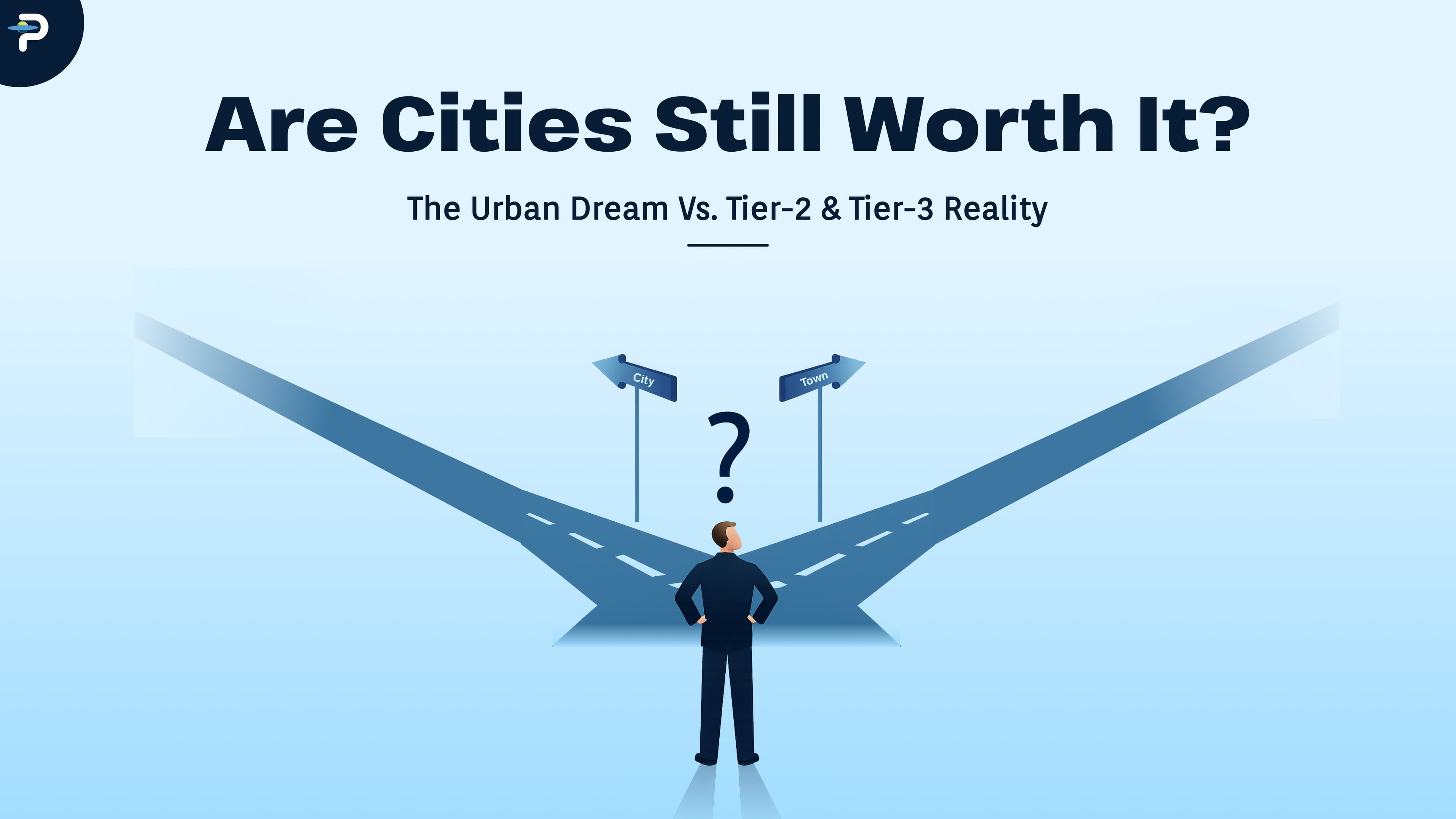
At the end of the day, the question isn’t “Are cities still worth it?” It’s “What makes your life feel worth living?”
And only you can answer that.
Discover more articles you may like.
Some top of the line writers.
Best Articles from Top Authors