But real discipline is quieter than that.
Discipline is not about doing hard things to prove something. It is about doing small, boring things because you respect yourself enough not to abandon them.
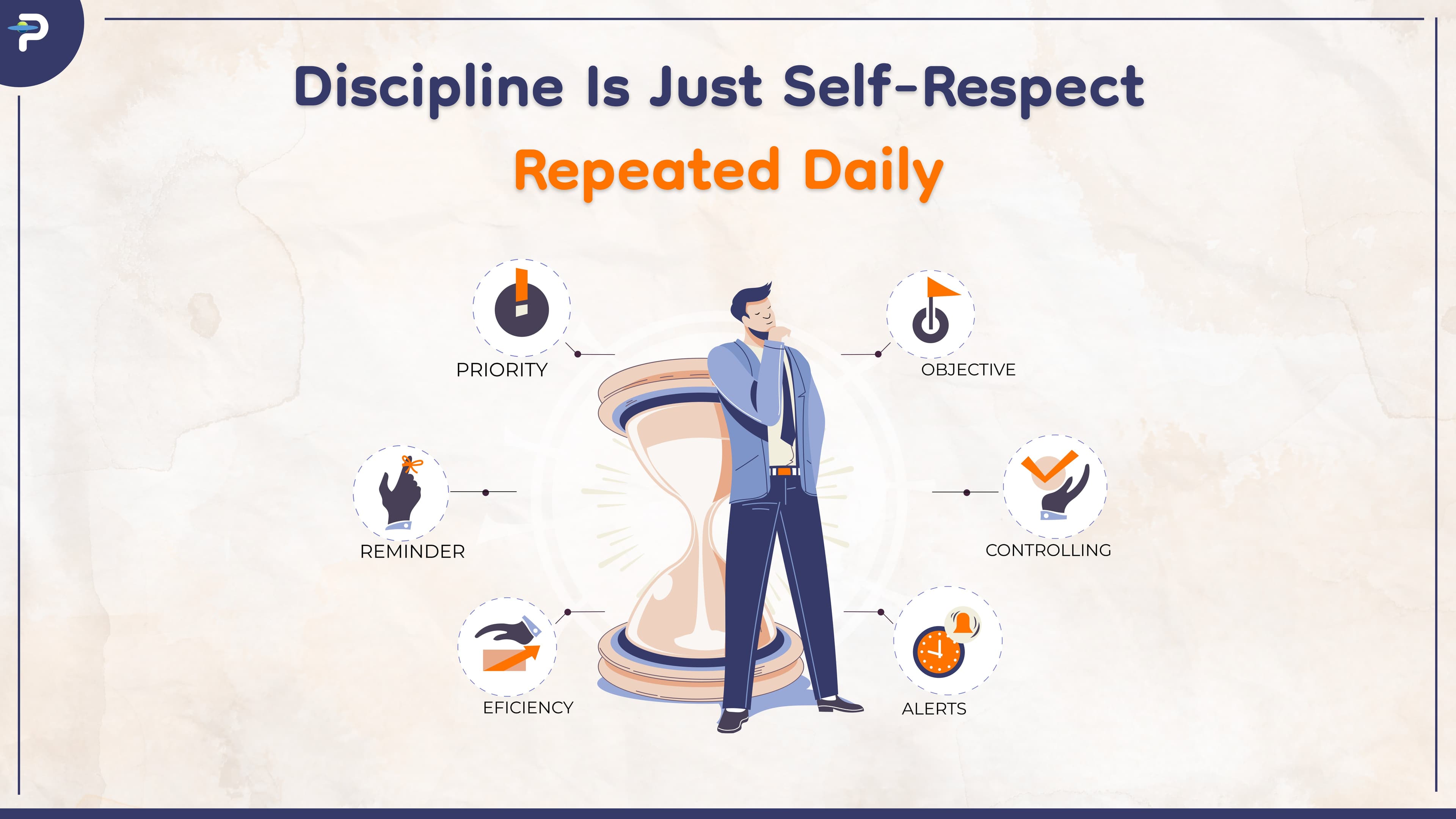
At its core, discipline is self-respect repeated daily.
When you respect someone, you don’t lie to them. You don’t constantly let them down. You don’t make promises you have no intention of keeping. You show up. Even when it’s inconvenient. Especially when it’s inconvenient.
The same applies to how you treat yourself.
Every time you say, “I’ll start tomorrow,” you are negotiating with your own word. And every time you break that promise, something subtle happens. You trust yourself a little less. You begin to assume your future self will also fail. Over time, this becomes identity.
That’s why lack of discipline rarely feels dramatic. It feels like drift.
You don’t wake up one day undisciplined. You slowly teach yourself that your commitments are optional.
True discipline isn’t about intensity. It’s about consistency. It’s choosing to act in alignment with who you say you are, even when no one is watching and no reward is immediate.
If you say you value your health, discipline looks like walking when you don’t feel like it. Eating reasonably when no one would judge you for overeating. Sleeping on time even though one more episode feels harmless.
If you say you value your work, discipline looks like starting before you feel ready. Finishing even when enthusiasm fades. Showing up on days when inspiration is absent.
None of this is glamorous. That’s the point.
Self-respect doesn’t need drama. It needs repetition.
People often wait for motivation before acting. But motivation is emotional. It fluctuates. Discipline is structural. It doesn’t ask how you feel today. It asks who you decided to be.
When you respect yourself, you don’t need to negotiate daily. You’ve already decided.
This is why disciplined people often look calm rather than driven. They aren’t constantly fighting themselves. The decision has already been made. The energy saved from internal debate goes into execution.
There is also a deeper layer here that most people miss.
Discipline isn’t self-control. It’s self-alignment.
When your actions and values are aligned, discipline becomes easier. Not because the work is easy, but because resistance decreases. You’re no longer forcing yourself to do things you secretly don’t believe in.