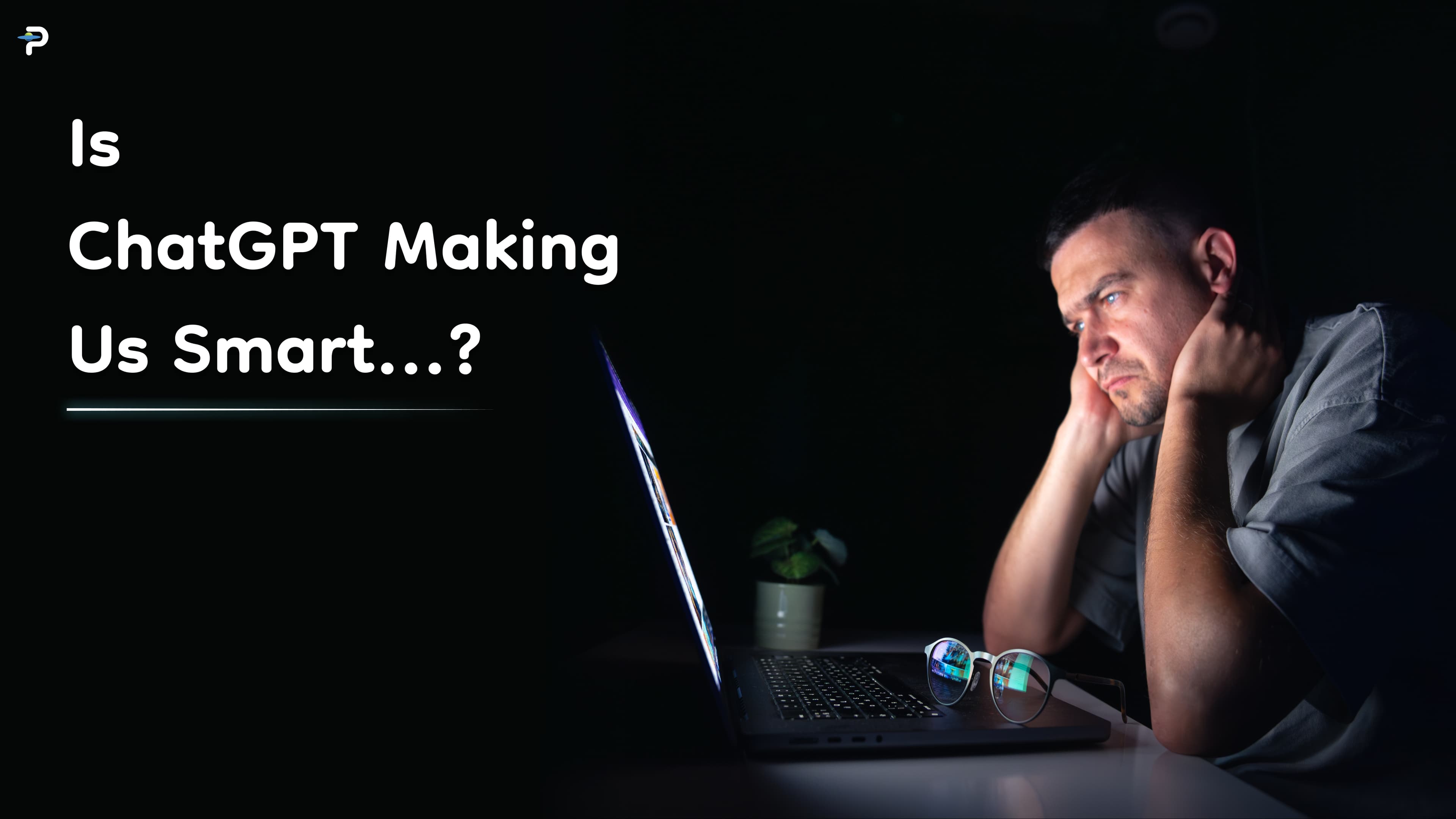
That raises an uncomfortable question.
Is ChatGPT actually making us smarter?
Or is it slowly making us rely less on our own thinking?
The answer isn’t simple.
Because ChatGPT can do both.
Used well, ChatGPT can act like a thinking partner.
It helps people understand topics faster.
Instead of spending hours searching, users can ask direct questions and get structured explanations.
That lowers the barrier to learning.
For students, it can clarify concepts they didn’t understand in class.
For professionals, it can explain unfamiliar domains quickly.
For writers, it can help organize thoughts or break through mental blocks.
ChatGPT doesn’t just give answers.
It can explain why an answer works.
That’s powerful when the user stays engaged.
It also encourages curiosity.
One question often leads to another.
That kind of back-and-forth mirrors how learning actually happens.
In this sense, ChatGPT is like a calculator for thinking.
Calculators didn’t make people bad at math.
They allowed people to focus on higher-level problems.
When users question responses, verify facts, and think critically, ChatGPT becomes a tool that amplifies intelligence.
Now comes the uncomfortable part.
Many people don’t use ChatGPT as a learning tool.
They use it as a shortcut.
Instead of thinking through a problem, they paste it in.
Instead of writing, they generate.
Instead of understanding, they accept.
Over time, this changes behavior.
When answers are always available instantly, the brain stops wrestling with uncertainty.
Struggle is part of thinking.
Remove struggle, and you weaken mental muscles.
There’s also the issue of trust.
ChatGPT sounds confident even when it’s wrong.
Users who don’t verify may absorb incorrect information without realizing it.
This creates passive consumption.
Thinking becomes outsourced.
Judgment becomes weaker.
In creative work, the risk is subtle.
People may stop forming original ideas and start polishing generated ones.
That feels productive, but it can hollow out creativity.
The danger isn’t that ChatGPT thinks for us.
It’s that we let it think instead of us.