The information provided on this publication is for general informational purposes only. While we strive to keep the information up to date, we make no representations or warranties of any kind about the completeness, accuracy, reliability, or suitability for your business, of the information provided or the views expressed herein. For specific advice applicable to your business, please contact a professional.
We like to think we are the CEOs of our own brains. We believe that when we choose a coffee, a car, or a career path, we are weighing the pros and cons like a balanced scale.
We are a cutting-edge technology company specializing in software development, AI-driven solutions, and enterprise IT services. Founded in 2015, the company has established itself as a leader in digital transformation, helping businesses leverage technology for growth and efficiency.
2 days ago5 min read
0
We are wrong.
In reality, our brains are more like a lazy contestant on a game show, we don't look for the "right" answer; we look for the "easiest" comparison. Enter the Decoy Effect: the psychological glitch that makes you spend more, eat worse, and feel like a genius while doing it.
But once you see the wires behind the curtain, you can stop being the puppet and start pulling the strings on your own habits.
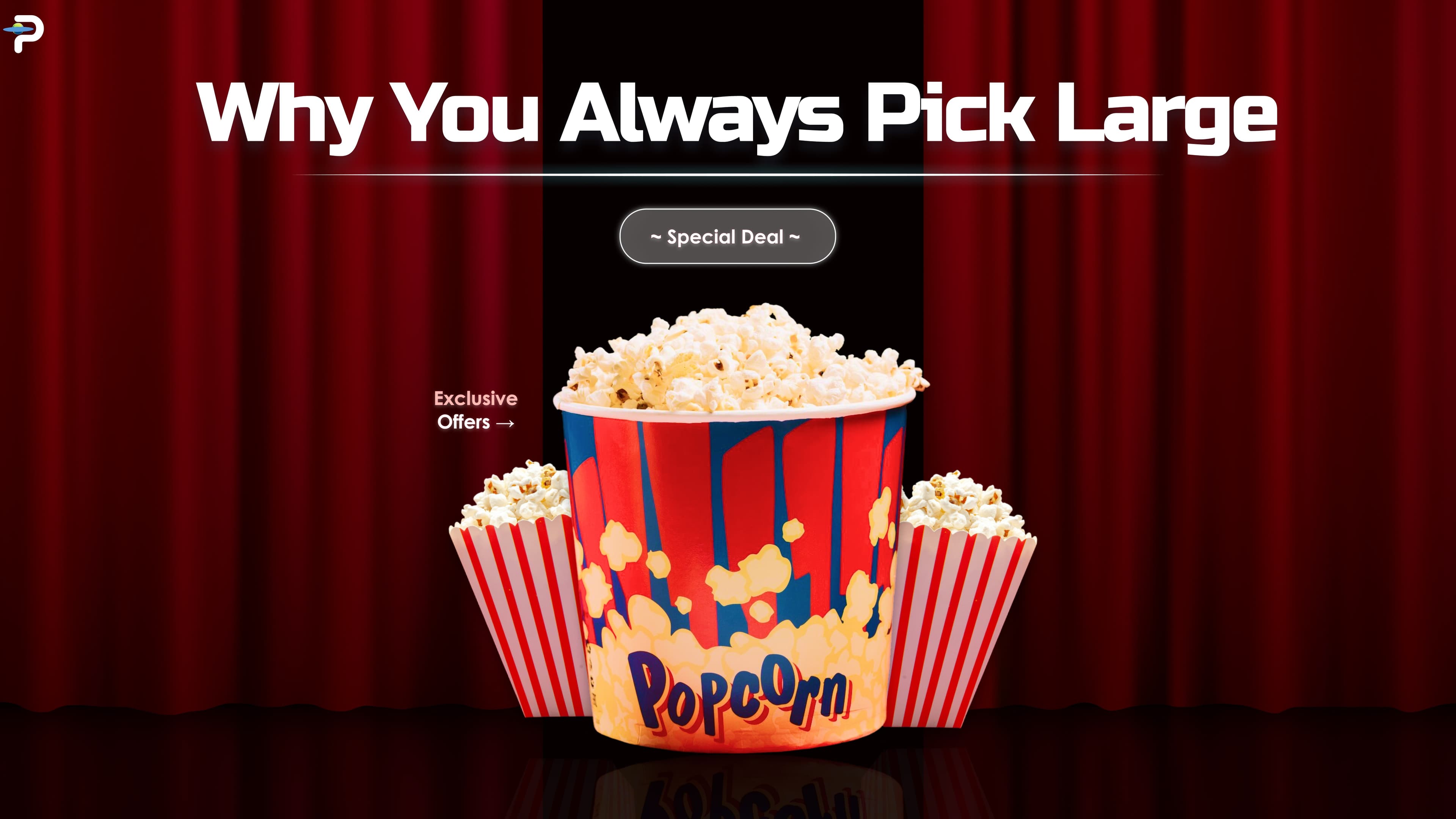
The "Popcorn Trap" (And Why You Fell For It)
You’re at the movies.
Small Popcorn: $4.00
Large Popcorn: $8.00
Most people hesitate. Four dollars is a snack; eight dollars is a commitment. You’ll probably go Small.
But then, the theater slides in the Decoy:
Medium Popcorn: $7.50
Suddenly, the Large isn't "expensive", it’s a steal. For a measly fifty cents, you get twice the popcorn! You walk away with a bucket the size of a trash can, feeling like you’ve outmaneuvered the system.
The theater didn't want you to buy the Medium. They hated the Medium. The Medium only exists to make the Large look like a bargain. This is Asymmetric Dominance, and it’s the reason your "sensible" budget disappears every time you go shopping.
The Brain’s Secret Weakness: Comparison Fatigue
The human brain is actually terrible at valuing things in a vacuum. If I ask you, "What is a high-quality leather jacket worth?" you’ll probably shrug. But if I show you a $500 jacket next to a $450 jacket that looks like it was made from a discarded sofa, you will suddenly "know" that the $500 one is a masterpiece.
We don't judge things by what they are; we judge them by what they are .
Related Articles
Discover more articles you may like.
Sponsored Articles
Related Articles
Discover more articles you may like.
Top Writers
Some top of the line writers.
Best from Author
Best Articles from Top Authors
Top Writers
Some top of the line writers.
Best from Author
Best Articles from Top Authors
next to
How to "Weaponize" the Decoy for Your Own Life
If businesses can use this to make us buy more sugar and spend more money, why aren't we using it to trick ourselves into being better humans? Here is how to build your own "Choice Architecture."
1. The Diet Decoy: Overcoming the "Cheat Meal"
Most diets fail because the choice is: Salad (Boring) vs. Pizza (Exciting). The brain hates that trade-off.
To win, you need to introduce a Decoy.
Let’s say you’re craving a greasy burger. Instead of "Burger vs. Salad," make the choice:
The Target: A lean, seasoned home-cooked turkey burger.
The Decoy: A cold, soggy, grey-looking burger from a cheap gas station.
The Temptation: A massive, $25 calorie-bomb from a steakhouse.
By focusing on how much better the home-cooked burger is than the "Decoy" (the gas station sad-wich), you give your brain an easy "win." You aren't "settling" for health; you’re choosing the superior version of the experience.
2. The Budget Decoy: Saving Without the Pain
If you want to save $500 a month, don't compare it to "Spending $500." Compare it to a Worse Savings Plan.
Set up three options for yourself:
Option A: Save $500 in a High-Yield account (The "Target").
Option B: Save $480 in a piggy bank with 0% interest (The "Decoy").
Option C: Save $100 (The "Lazy" option).
Option B is objectively stupid. Why would you save almost the same amount for zero return? But by having Option B there, Option A suddenly looks like a high-value "investment" rather than a sacrifice. You’ve tricked your brain into thinking that saving $500 is a "deal" you can't pass up.
3. The "Ugly Date" Theory (for Productivity)
Struggling to start a project? Use the "Shitty First Draft" as a decoy.
If your choices are "Write a Masterpiece" vs. "Watch Netflix," Netflix wins.
But if you add a decoy, "Write 10 minutes of absolute, incoherent gibberish", suddenly, "Writing a decent paragraph" feels achievable and logical. You use the low-quality option to make the medium-quality option look effortless.
The Verdict: Write Your Own Menu
The world is constantly trying to nudge you toward the "Large Popcorn" of life. Every subscription service, car dealership, and restaurant menu is designed to make the most expensive option look like the smartest one.
The secret to a better life isn't more willpower; it’s better Comparison Management. Stop being the consumer who picks the "best" of three bad options. Start being the architect who designs the options so that the "best" choice is the one that actually helps you.
Next time you’re stuck on a hard decision, ask yourself: "Am I picking this because it’s good, or because someone just showed me something worse?"