The information provided on this publication is for general informational purposes only. While we strive to keep the information up to date, we make no representations or warranties of any kind about the completeness, accuracy, reliability, or suitability for your business, of the information provided or the views expressed herein. For specific advice applicable to your business, please contact a professional.


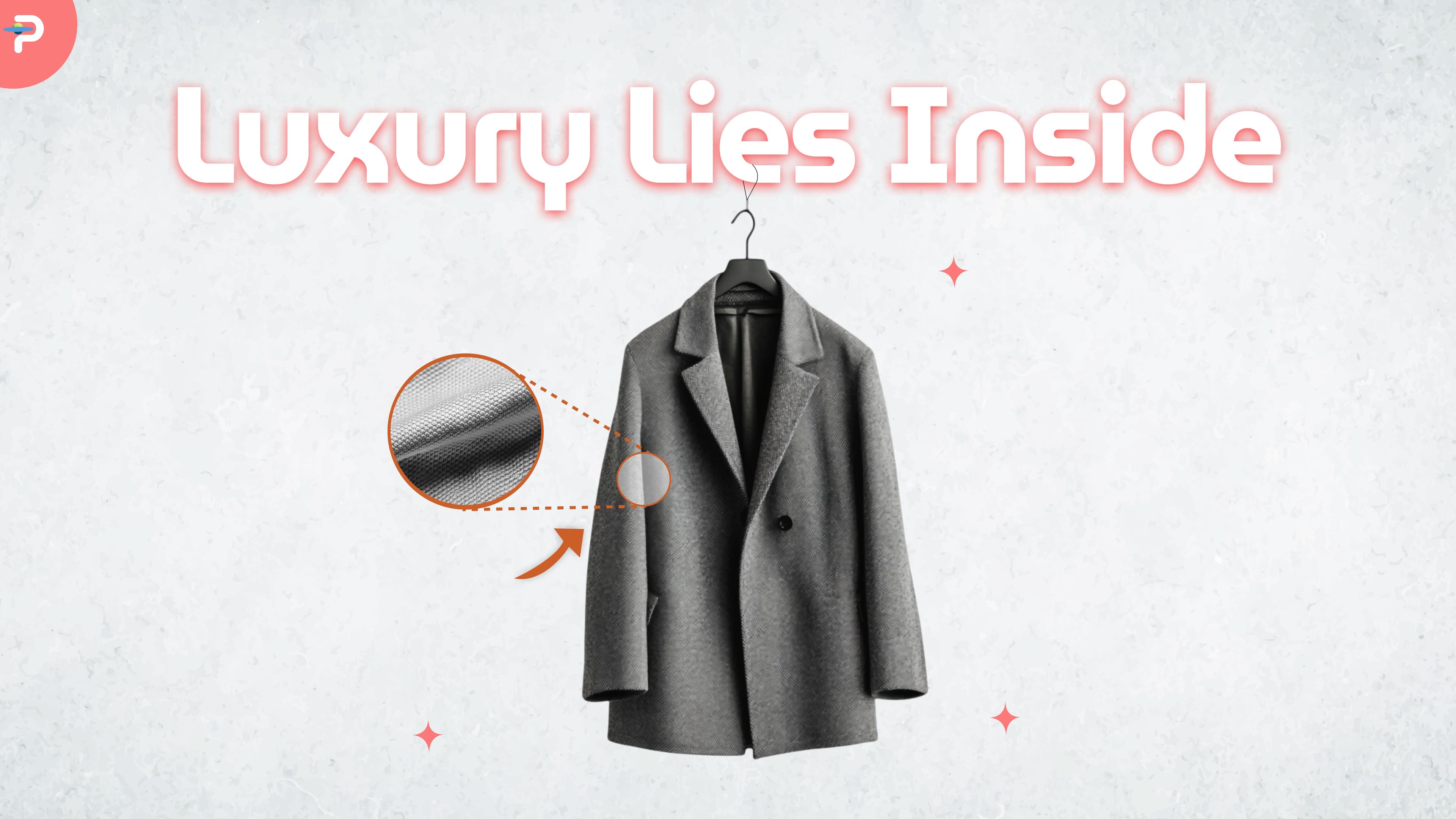
In an era of "quiet luxury" and rapidly declining production standards, the real flex isn't the logo on the chest, it’s the construction inside the ribs. If you want to build a wardrobe that lasts decades rather than seasons, you have to stop looking at the silhouette and start looking at the guts.
Here is how to perform an "Internal Luxury Check" to ensure you’re actually buying a piece of art, not just a piece of fabric.
The easiest way to tell if a brand is cutting corners is to turn the garment inside out. In mass-produced "fast-luxury," you’ll often see overlocked edges, that zigzagged thread meant to keep the fabric from fraying. While functional, it’s the bare minimum.
True quality reveals itself through French seams or Hong Kong finishes. A French seam encases the raw edge of the fabric within the seam itself, leaving a clean, smooth line that won’t irritate your skin or unravel. A Hong Kong finish uses a thin strip of silk or bias tape to bind the edges. If you see these, you’re looking at a garment that required significantly more time and precision to create.
The Pull Test: Gently tug at the seam from the outside. If you see daylight between the stitches, put it back. High-quality stitching should be dense, even, and tight enough to hold the tension of your movement.
A lining isn't just there to make the garment slide on easily; it’s the architecture that maintains the shape.
Check the material first. If you’re buying a $500 wool blazer and the lining is 100% polyester, you’re going to be wearing a sweat-trap. Look for Bemberg (Cupro), Viscose, or Silk. These materials breathe, drape beautifully, and feel like a second skin.
Furthermore, look for a "bagged" lining. In high-quality tailoring, the lining isn't stitched flat to the outer fabric. There should be a small "give" or a pleat at the hem and the back. This is intentional. It allows the outer fabric to move and stretch without the lining pulling or tearing. If the lining feels tight or restricted, the garment will eventually warp.
If you want to spot a "tailor-made" feel in thirty seconds, look at the buttonholes. Most machine-made buttonholes are cut first and then stitched over, leading to frayed edges over time.

Discover more articles you may like.
Some top of the line writers.
Best Articles from Top Authors
Luxury garments, the kind that truly merit their price, often feature hand-worked buttonholes. They are slightly irregular, thicker, and have a beautiful, raised texture. They are stitched before the hole is cut, creating a structural reinforcement that won't give way.
Also, check the buttons themselves. Plastic is the enemy of longevity. Look for Mother of Pearl, Horn, or Corozo (Tagua nut). These materials have weight, unique grain patterns, and a temperature that feels substantial to the touch.
If you are buying anything with a check, stripe, or plaid, look at the pockets and the side seams. Does the pattern continue seamlessly across the break in the fabric?
Matching patterns requires "waste", you have to cut the fabric specifically to align the design, which means the manufacturer can’t squeeze as many pieces out of a single roll of cloth. If the stripes on the shoulder don't line up with the stripes on the sleeve, the brand prioritized profit over precision. In the world of high fashion, a mismatched plaid is an immediate "no."
Finally, trust your tactile intuition. High-quality natural fibers, long-staple cotton, high-grade cashmere, or heavy-weight linen, have a "hand" (a feel) that synthetic blends simply cannot replicate.
Do the "crinkle test": Squeeze a handful of the fabric for five seconds. If it stays a crumpled mess, it lacks the structural integrity of high-quality fiber. If it bounces back with minimal wrinkling, it has the resilience to withstand a long day of wear and still look polished.
Becoming a smarter shopper isn't about memorizing brand hierarchies; it’s about becoming a detective of detail. When you stop shopping with your eyes and start shopping with your hands, your wardrobe undergoes a transformation. You stop buying "stuff" and start investing in "pieces."
The next time you find a garment you love, flip it inside out. Does it look as beautiful on the inside as it does on the hanger? If the answer is yes, you’ve found something worth keeping.