The information provided on this publication is for general informational purposes only. While we strive to keep the information up to date, we make no representations or warranties of any kind about the completeness, accuracy, reliability, or suitability for your business, of the information provided or the views expressed herein. For specific advice applicable to your business, please contact a professional.
The Nervous System Tools Actually Worth Talking About
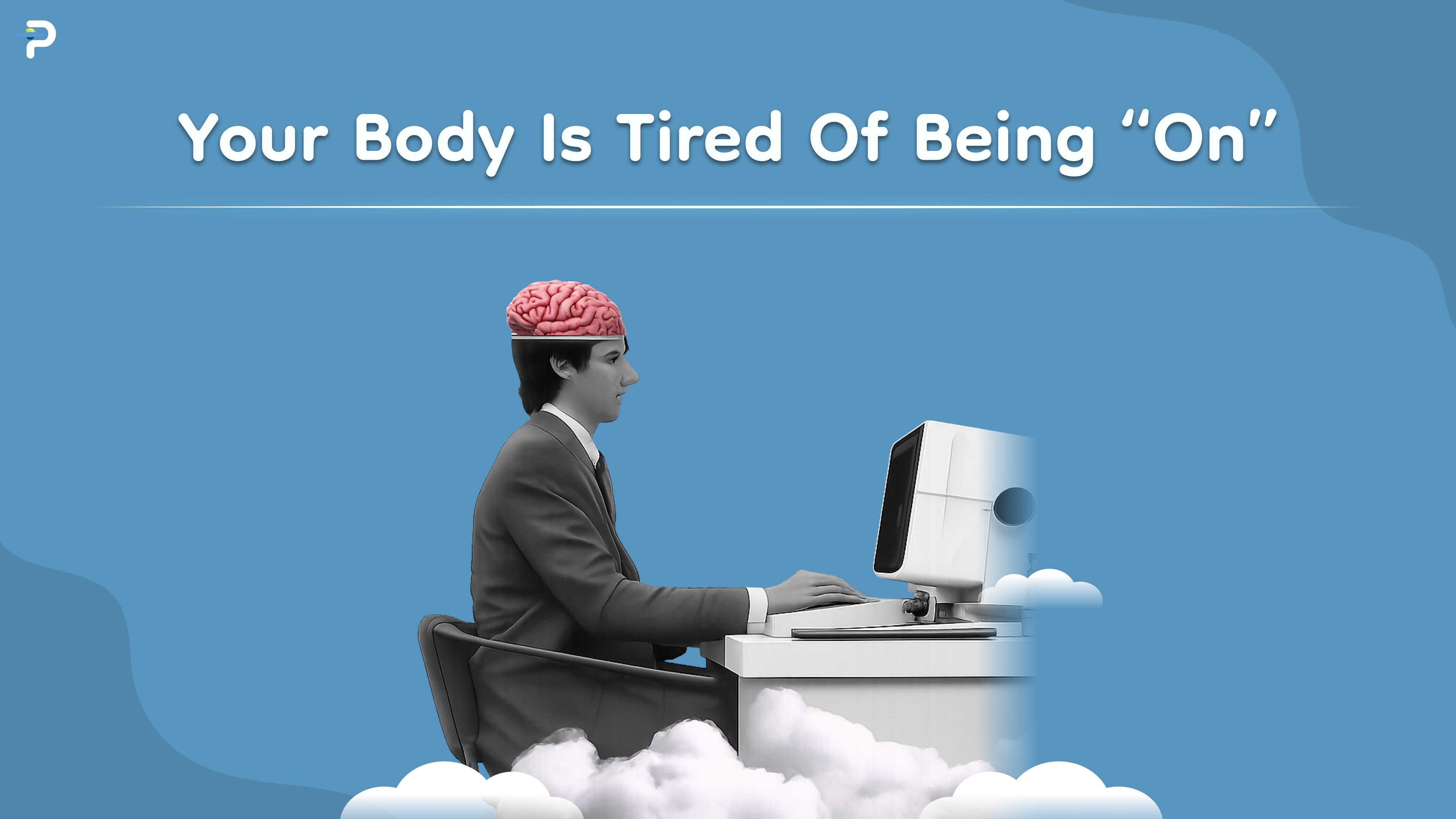
There's a particular kind of exhaustion that sleep doesn't fix. You know the one. You wake up after eight hours and your jaw is already clenched. Your shoulders are somewhere near your ears. You're not tired exactly, you're wired, in the way that modern life seems to specialize in. Cortisol ticking along like a low engine hum, your brain already tabbing through tomorrow's problems before you've had coffee.
We are a cutting-edge technology company specializing in software development, AI-driven solutions, and enterprise IT services. Founded in 2015, the company has established itself as a leader in digital transformation, helping businesses leverage technology for growth and efficiency.
10 hours ago5 min read
0
Fitness culture spent the last decade telling us to optimize. Track your steps, hit your macros, PR your lifts. And look, none of that is bad. But there's a growing realization, backed by a wave of neuroscience research and a lot of exhausted high-performers, that the missing piece isn't more data. It's regulation. Not pushing harder. Actually learning to come down.
That's the idea behind what's being called somatic regulation tools, a category of products designed not to measure your body's performance, but to physically help it shift gears. Here's what's actually interesting in this space right now.
Sensate 3: Vibrating Your Way to Calm
The Sensate device looks like a smooth river stone you'd find at a spa. You lie down, place it on your chest, put on headphones, and it gets to work. The mechanism is genuinely interesting: it uses infrasonic vibrations, sound frequencies below the range of human hearing, to stimulate the vagus nerve through your sternum.
Why the vagus nerve? Because it's essentially the express lane between your brain and your body's "rest and digest" system. When it's activated properly, your heart rate drops, your breathing deepens, and your nervous system gets a physiological signal that it's safe to relax. The kind of signal that a 45-minute meditation might produce, except Sensate claims to get you there in about ten minutes.
The third-generation device pairs with an app that plays synchronized soundscapes, layered over the physical vibration. Users describe it as a combination of sound bath and full-body exhale. It's not magic, and it's not a replacement for actual stress management in your life, but as a tool for breaking an acute stress cycle, the feedback is compelling. The vagus nerve stimulation space is getting serious scientific attention, and consumer devices like this are making it accessible in a way clinical devices never were.
Infrared Sauna Blankets: Passive Recovery Without Leaving Your Bed
Traditional saunas are wonderful. They're also large, expensive, and require you to either build something in your bathroom or drive to a wellness center. HigherDOSE's infrared sauna blanket solves that problem in the most straightforward way possible: it folds up, fits under your bed, and you zip yourself into it like a very glamorous burrito.
Related Articles
Discover more articles you may like.
Sponsored Articles
Related Articles
Discover more articles you may like.
Top Writers
Some top of the line writers.
Best from Author
Best Articles from Top Authors
Top Writers
Some top of the line writers.
Best from Author
Best Articles from Top Authors
The distinction between infrared heat and conventional sauna heat is worth understanding. Regular saunas heat the air around you, which then heats your body from the outside in. Infrared heats your body directly, using the same spectrum of light that makes sunlight feel warm on your skin, but without the UV. The result is a deeper tissue penetration at lower ambient temperatures, which means you're sweating profusely at temperatures that feel far more comfortable than a traditional sauna.
The claimed benefits include improved circulation, lymphatic drainage, muscle recovery, and sleep quality. And there's reasonable evidence behind several of these. Passive heat exposure raises core body temperature, and the subsequent drop as you cool down is one of the most reliable ways to trigger deep sleep onset. For anyone doing regular physical training, chronic stress, or dealing with muscle tension, forty minutes in the blanket a few evenings a week has become a legitimate recovery staple.
The HigherDOSE version has established itself as the premium choice in this category, better heat distribution, more durable materials, and an app that lets you dial in the temperature gradually rather than hitting you all at once. It's not cheap, but compared to a home sauna installation, it's practically a rounding error.
Magnesium-Hormone Stacks: Supplements That Actually Know What They're For
The supplement industry has a credibility problem, and it's largely self-inflicted. Decades of vague promises, "supports energy," "promotes wellness", have made consumers reasonably skeptical of anything that comes in a capsule. But something is shifting in the formulation space, and the best example right now is the move toward targeted, mechanistically specific stacks.
Atmosphere Studio's approach is a good illustration. Rather than selling a generic multivitamin with a few magnesium milligrams tucked in, they build formulations around specific physiological pathways. Their "Acid Tamer" blend addresses the gut-brain axis, targeting the digestive and nervous system connections that influence things like anxiety, mood stability, and cognitive clarity. "Bloat No More" works on the microbiome and inflammation pathways that are increasingly understood to affect mental health as much as physical comfort.
Magnesium is the backbone of much of this. It's involved in over 300 enzymatic reactions in the body, including the production of serotonin and GABA, the neurotransmitters your nervous system most needs when it's stressed. Most adults are functionally deficient in it, partly because modern soil depletion has stripped it from food sources, and partly because stress itself depletes it in a cruel feedback loop.
What makes these stacks interesting isn't just the ingredients, it's the philosophy behind them. The gut-brain axis has moved from fringe science to mainstream medicine in the last decade, and supplements built around it feel meaningfully different from the shotgun multivitamin approach. You're not taking seventeen things hoping something works. You're addressing a specific system with specific inputs.
What Connects All of This
The thread running through all three of these tools is the same: they're working with the body's existing hardware, not trying to override it. The vagus nerve stimulation isn't a hack, it's a prompt. The infrared heat isn't forcing recovery, it's creating conditions where recovery can happen. The targeted supplements aren't pushing the body to perform, they're replenishing what the body needs to regulate itself.
That's the quiet shift happening in wellness right now. Less about optimization metrics, more about restoration. Less about what your body can do under pressure, more about whether it can actually come down from that pressure. The people paying most attention to this aren't just the biohacking crowd, they're anyone who has noticed that stress has become a kind of ambient condition, and that the old advice of "just relax" was never actually a method.
These tools are, in different ways, methods. And that's what makes them worth paying attention to.