The information provided on this publication is for general informational purposes only. While we strive to keep the information up to date, we make no representations or warranties of any kind about the completeness, accuracy, reliability, or suitability for your business, of the information provided or the views expressed herein. For specific advice applicable to your business, please contact a professional.


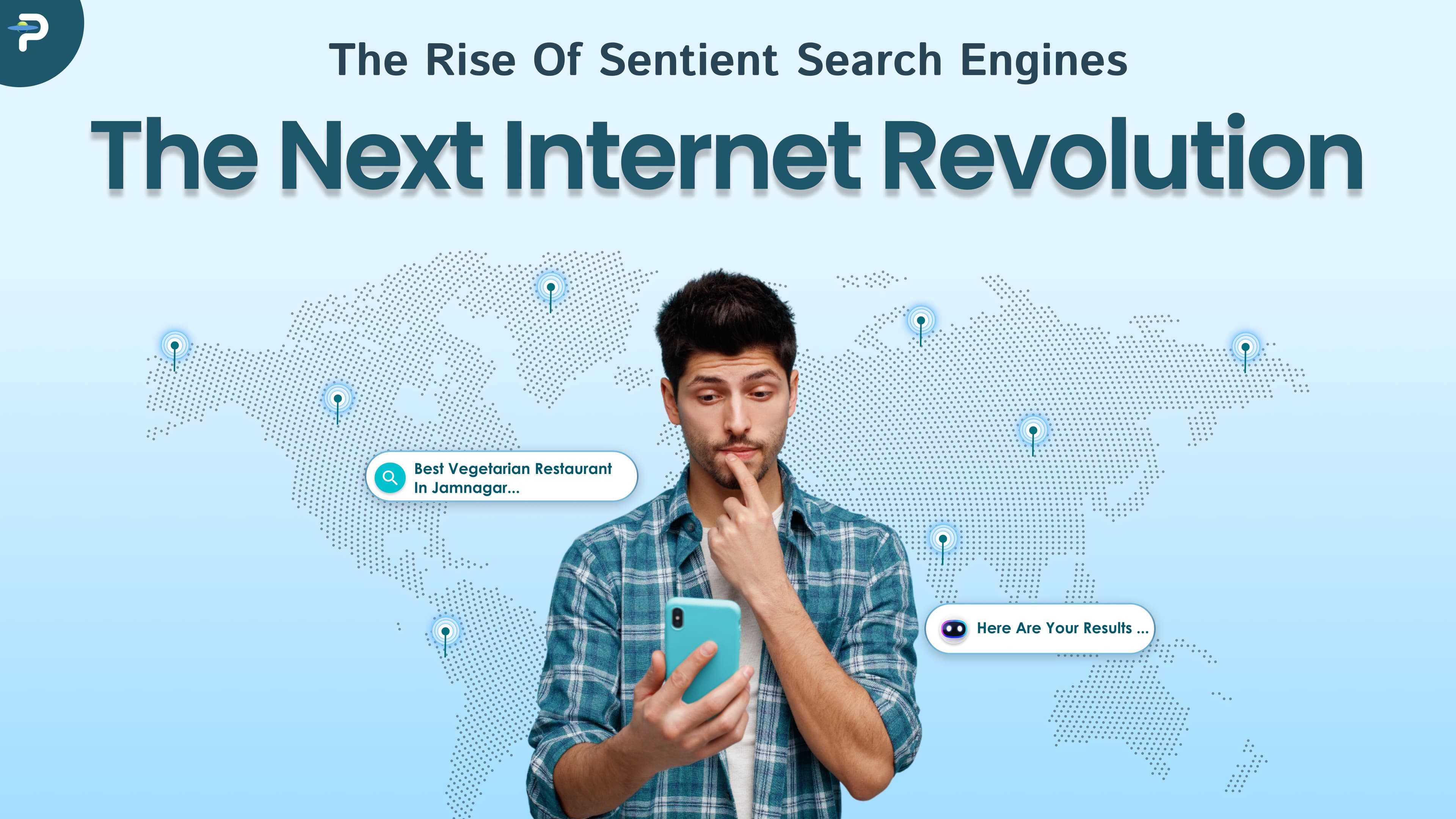
First we had simple search: match a keyword to a document. Then came smarter search: semantic understanding, contextual results, natural‐language queries. Now we are edging into a third wave. Thanks to advances in large language models (LLMs) and knowledge graphs, search engines can handle more than a query — they can interpret intent, follow a conversation, anticipate your next question. Imagine you ask: “I’m in Jamnagar for two days with my family, late 40s parents, adult kids – any nature spots + luxury resort suggestions?” A next-gen engine won’t just return pages titled “Jamnagar resorts” and “nature spots near Jamnagar” — it might say: “Here’s a one-day itinerary starting with the Aina Mahal gardens, moving to the Narara Marine National Park coral reef viewpoint, and staying at this luxury resort that offers vegetarian vegan meal options.” It anticipates, curates, adapts.
Call it sentience if you like, though we’re not talking about full consciousness or science-fiction robots. It’s more about a search engine that becomes conversational, context-aware, memory-enabled. It remembers that you have vegan dietary preferences (hello, fellow vegetarian/vegan reader), that you plan trips with your family, that you sometimes want light adventure and nature. It links past interactions with present ones. Among the research, one study showed that generative search engines (mixing search + LLM generation) are used for richer, higher-cognitive‐complexity tasks than classic engines. So you’ll find yourself asking: Did I just talk to a search engine, or a helpful assistant?
Picture this: It’s early morning and you’re sipping coffee. You ask: “Show me vegetarian brunch spots near my hotel in Bali that open at 9 am and have beach views.” The engine spots your location via your phone, knows from previous search that you’re vegetarian, filters real-time data, pulls three spots, with photos, prices, travel time, and a small surprise: “If you book by 8:45am you’ll catch the sunrise from the deck.” You tap one result, then ask: “And can you send a reservation link and show me a 5-star resort nearby that offers vegan cooking classes?” It shows one, offers to send the link to your WhatsApp or email, and says: “Also note: the resort has a spa but the cooking-class slots fill by noon, would you like me to tentatively book for you?” It feels less like search, more like planning-assistant. And whether you call that sentient or smart doesn’t matter, the experience has changed.

Two major shifts are converging. First, the AI/LLM wave: models now can generate human‐like text, summarize huge documents, connect disparate pieces of information. This means search engines can do more than fetch — they can synthesize. Second, data infrastructure and context links: devices, apps, cookies, privacy shifts. A search engine today can tap into more signals about you (with consent), context of your location, past behaviour, even mood (implicitly). Combine that with AI and you get emergent behaviour: the engine anticipates your needs. One example: Sentient Foundation is building a large open-source network of AI agents and models that collaborate, “The GRID” initiative. While not a search engine per se today, it points to a future where many AI modules interlink to support adaptive services.
With great power comes great complexity. Sentient search engines raise questions like:
What’s most interesting is not just how search works, but how we relate to it. We used to ask and get. Soon we’ll converse and co-create. Search will not simply respond; it will engage. Think of our relationship with maps apps: once you tapped a destination, now the app suggests best departure time, alternative routes, warns of traffic, learns your preferences. Search is heading the same way. And because this shift is happening quietly (behind screens), we might not notice the change until it’s the new normal. But when we do, we’ll wonder how we ever tolerated typing multiple keywords, scanning pages, jumping back and forth. We’ll look back and laugh: “Oh yes, we used to do search the old way.”
Five years from now maybe your search engine will greet you: “Morning Samir! Ready for your India-trip research? Based on your last trip to Bali and your family’s preferences, here are three new destinations with vegan-friendly resorts, flights, and nature experiences, would you like me to block-book one for you now?” That might sound futuristic, but I believe that’s the next frontier of internet search. The engine doesn’t need feelings like we do. It needs context, memory, adaptability. And when it has that, our digital lives change. And perhaps, just perhaps, we’ll start calling it less “search engine” and more “search companion”.
Discover more articles you may like.
Some top of the line writers.
Best Articles from Top Authors