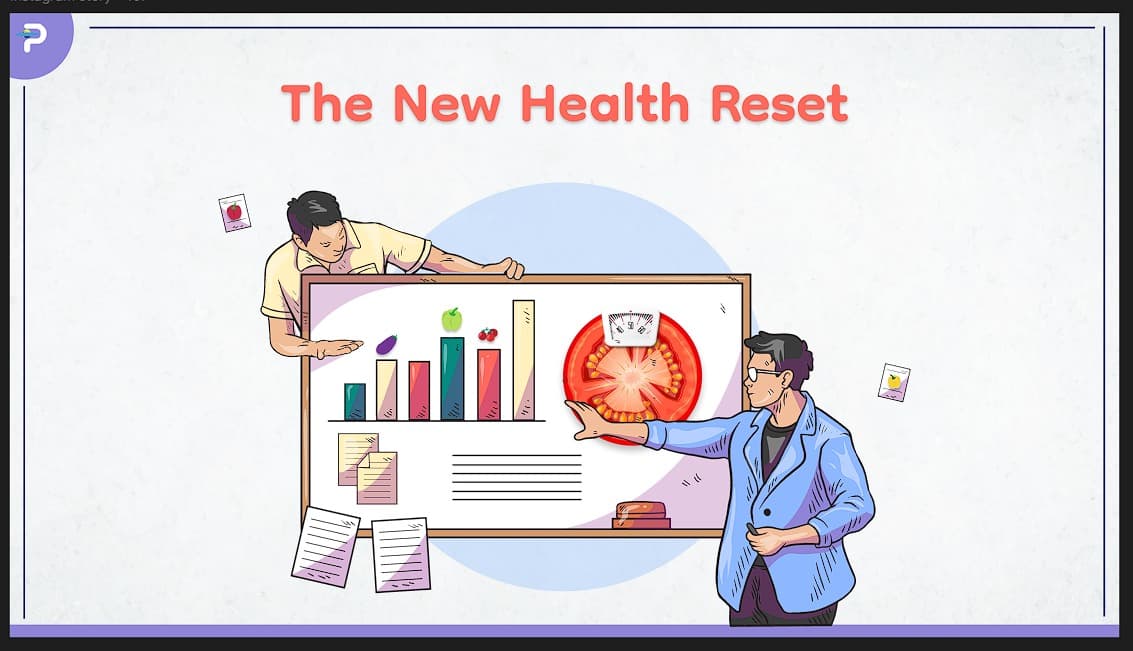
But as we navigate 2026, the data honeymoon is over. We’ve reached "peak optimization," and the view from the top is surprisingly anxious.
The newest, most vital movement in health isn't a new wearable, it’s Metric Fasting. It is the intentional choice to strip off the sensors and stop outsourcing our intuition to an algorithm. It’s a return to the oldest health metric in existence: How do I actually feel?
The catalyst for this backlash is a phenomenon known as Orthosomnia,an unhealthy obsession with achieving "perfect" sleep scores that, ironically, causes enough stress to ruin your actual sleep. When you wake up feeling refreshed but feel a wave of dread because your ring gave you a "Readiness Score" of 54, you aren't managing your health; you're managing an anxiety disorder.
Over-optimization has created a "middleman" between us and our bodies. We’ve stopped asking our stomachs if we’re full, instead waiting for an app to tell us we’ve hit our macros. We’ve stopped listening to the subtle ache in our joints, pushing through a workout because a watch told us we were "in the green."
Metric Fasting isn't necessarily "anti-tech." It is a period of digital celibacy designed to recalibrate your internal sensors. Much like Intermittent Fasting gives your digestive system a break, Metric Fasting gives your nervous system a break from the constant "dopamine hits" of notifications and performance badges.
- The Weekend Blackout: Remove all wearables from Friday evening to Monday morning. No step counting, no sleep tracking, no heart-rate monitoring.
- The "Blind" Workout: Exercise without a watch. Run until you feel tired, lift until your form wavers, and focus on the sensation of your muscles rather than the "calories burned" display.
- The Intuitive Eating Reset: Delete the calorie trackers for two weeks. Relearn the "HALT" signals, asking yourself if you are truly Hungry, Angry, Lonely, or Tired before reaching for food.
The goal of Metric Fasting is to improve Interoception,the brain’s ability to sense and interpret internal signals from the body.
When we rely on external data, our interoceptive "muscles" atrophy. We lose the ability to distinguish between a "stress headache" and a "dehydration headache" because we’re too busy checking our hydration app. By removing the data, we force the brain to re-establish a direct line of communication with the heart, lungs, and gut.
In 2026, the truly "optimized" individual isn't the one with the most sensors; it’s the one who is most in tune with their own frequency. High-performance athletes and mindful executives are moving toward a "Hybrid Model",using data for short-term "baselining" (e.g., tracking a new supplement for two weeks) and then disconnecting to live by intuition.
The ultimate luxury in an over-quantified world is the confidence to say, "I don't need a score to know I had a great day."