The information provided on this publication is for general informational purposes only. While we strive to keep the information up to date, we make no representations or warranties of any kind about the completeness, accuracy, reliability, or suitability for your business, of the information provided or the views expressed herein. For specific advice applicable to your business, please contact a professional.
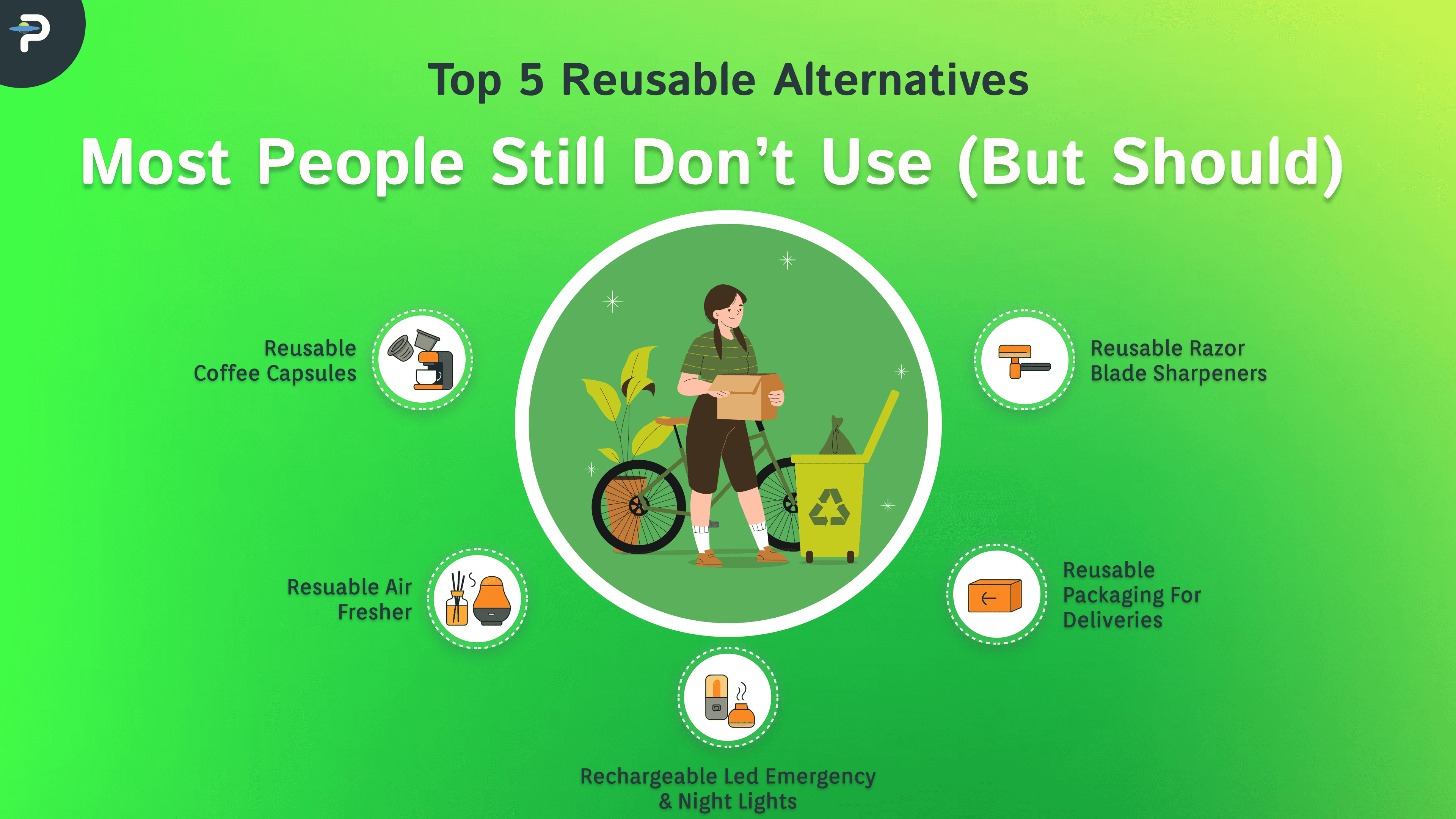
Top 5 Reusable Alternatives Most People Still Don’t Use (But Should)
Sustainability conversations often get stuck at the same place: cloth bags, steel bottles, metal straws. Important, yes, but also well-worn territory. The bigger opportunity lies in the less visible items we use daily without noticing how disposable they are.
We are a cutting-edge technology company specializing in software development, AI-driven solutions, and enterprise IT services. Founded in 2015, the company has established itself as a leader in digital transformation, helping businesses leverage technology for growth and efficiency.
2 months ago5 min read
0
Real progress doesn’t come from dramatic swaps. It comes from replacing the things we don’t question.
Here are five reusable alternatives that still fly under the radar, and why they matter.
1. Reusable Coffee Capsules (For Pod Machines)
Coffee pod machines feel convenient, but they generate enormous waste. Aluminium and plastic capsules are used once and discarded, often unrecycled due to mixed materials.
Reusable coffee capsules, made from stainless steel, fit directly into pod machines. You fill them with ground coffee, brew as usual, rinse, and reuse.
The experience doesn’t feel “eco.” It feels normal, which is exactly the point.
Why this matters:
One reusable capsule can replace hundreds of disposable pods
Reduces metal and plastic waste simultaneously
Lets users choose ethical, local coffee instead of sealed capsules
This is one of those swaps that feels invisible after a week, but compounds over years.
2. Reusable Air Freshener Diffusers (Instead of Aerosol Sprays)
Air fresheners are rarely discussed in sustainability talks, yet they’re a major source of waste and indoor air pollution. Aerosol cans, synthetic fragrances, and pressurised packaging all add up.
Reusable reed diffusers or electric aroma diffusers use refillable oils instead of disposable cans. A single glass diffuser bottle can last for years, needing only oil refills.
Why this matters:
Eliminates pressurised metal cans
Reduces chemical exposure indoors
Related Articles
Discover more articles you may like.
Sponsored Articles
Related Articles
Discover more articles you may like.
Top Writers
Some top of the line writers.
Best from Author
Best Articles from Top Authors
Top Writers
Some top of the line writers.
Best from Author
Best Articles from Top Authors
Refillable oils create far less packaging waste
It’s a small shift, but one that replaces a product many households buy repeatedly.
3. Rechargeable LED Emergency & Night Lights
Emergency bulbs and battery-powered lights are quietly wasteful. Disposable batteries are replaced often, and many end up improperly discarded.
Rechargeable LED emergency lights charge via USB or socket power and last years. They switch on automatically during power cuts and don’t rely on disposable batteries at all.
Why this matters:
Cuts battery waste, which is highly toxic
Reduces repeated plastic purchases
Energy-efficient and long-lasting
This is sustainability disguised as practicality, especially in regions with frequent power outages.
4. Reusable Razor Blade Sharpeners (Not Just Safety Razors)
Even people who use reusable razors often replace blades quickly. Blade sharpeners—small devices that realign razor edges, can double or triple blade life.
This idea sounds old-fashioned because it is. And that’s exactly why it works.
Why this matters:
Reduces metal waste significantly
Cuts down manufacturing demand
Saves money without behavioural change
It’s not flashy. It’s just smart reuse, something sustainability needs more of.
5. Reusable Packaging for Deliveries (Returnable Systems)
Online shopping is one of the fastest-growing waste sources. Cardboard, plastic mailers, bubble wrap, all single-use.
Some emerging systems now offer returnable delivery packaging, durable boxes or bags collected during the next delivery or returned via drop points.
This model is already used in parts of Europe and slowly expanding elsewhere.
Why this matters:
Attacks waste at the system level
One box can replace dozens of packages
Scales far better than individual consumer swaps
This is sustainability moving beyond personal guilt into infrastructure-level change.
Why These Alternatives Actually Matter
What makes these swaps powerful is not novelty, it’s frequency.
They replace items that are:
Used repeatedly
Bought without thought
Rarely questioned
That’s where waste hides.
The biggest environmental damage doesn’t come from dramatic one-time actions. It comes from small disposables repeated millions of times.
Reusable alternatives work best when they don’t demand effort, sacrifice, or constant awareness. When the sustainable choice becomes the easiest one, change sticks.
The Real Shift Isn’t Products—It’s Attention
We don’t need more “eco” branding.
We need better default systems.
The next wave of sustainability isn’t about showing you care. It’s about quietly removing waste from everyday life, until disposal feels unnecessary.
That’s when reuse stops being an idea and starts becoming culture.