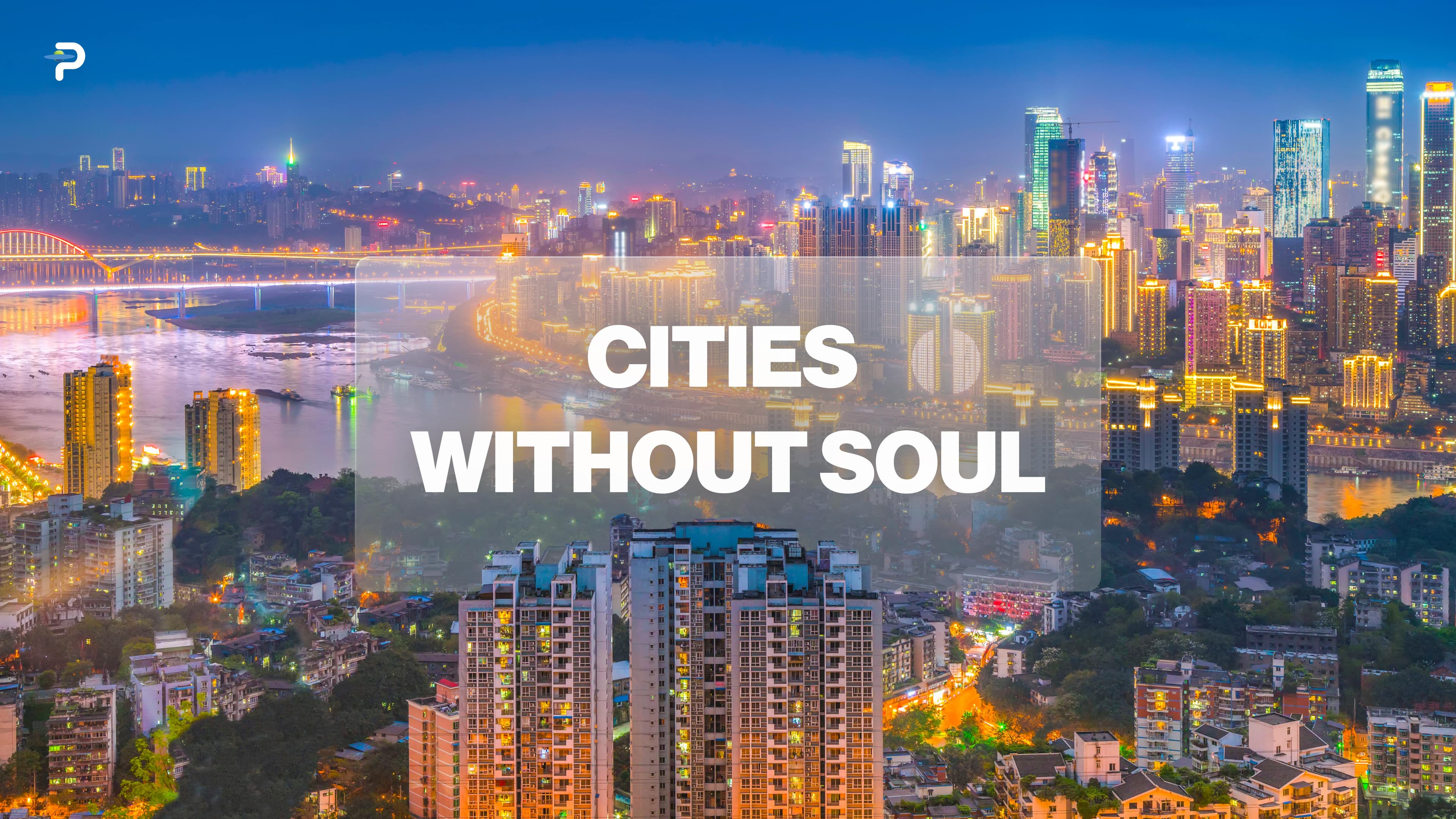
Rectangles. Endless, shiny, glass rectangles.
There has been a quiet tragedy in the evolution of our built environment. Somewhere along the line, we decided that "efficiency" was the only metric that mattered. In doing so, we traded character for geometry, and the human touch for industrial standardization. We have entered the age of the boring building, and it is affecting us more than we realize.
Historically, architecture was viewed as a conversation with the public. A bank wasn't just a place to store money; it was a Roman temple signifying stability. A train station wasn't just a transit hub; it was a cathedral of progress with vaulted ceilings and mosaic floors. Even the most mundane objects had character.
Take the humble public bench. If you look at archival photos from the 19th or early 20th centuries, a bench was rarely just a place to sit. It was a piece of cast-iron art. The legs might have been shaped like griffins or woven vines; the wood was curved to fit the human spine; the armrests were polished and inviting. These objects were designed with the understanding that public spaces are the living rooms of the city. They were meant to be enjoyed, not just used.
Today, the public bench has been reduced to a utilitarian plank. At best, it is a sleek, soulless slab of concrete or metal that looks like it came out of a factory mold (because it did). At worst, it is "hostile architecture", designed specifically to be uncomfortable to prevent loitering, stripped of all beauty and reduced to a weaponized rectangle.
Why has everything become so square? The shift is largely due to the rise of Modernism in the mid-20th century, which championed the motto "form follows function." While the intention was to strip away the excessive ornamentation of the past to create something pure and honest, the result was often a sterilization of the landscape.
We stopped building for the human eye and started building for the spreadsheet. A rectangular glass box is cheaper to engineer, faster to build, and easier to subdivide than a building with curves, nooks, and intricate masonry. We optimized the "special" right out of our skylines.
The problem with this hyper-efficiency is that humans aren't rectangular. We are organic beings. We are drawn to fractals, textures, and curves, shapes that mimic nature. When we are surrounded entirely by sharp angles and flat, grey surfaces, our brains register a lack of sensory stimulation. It is a phenomenon known as "architectural boredom," and studies suggest it can actually increase stress levels.